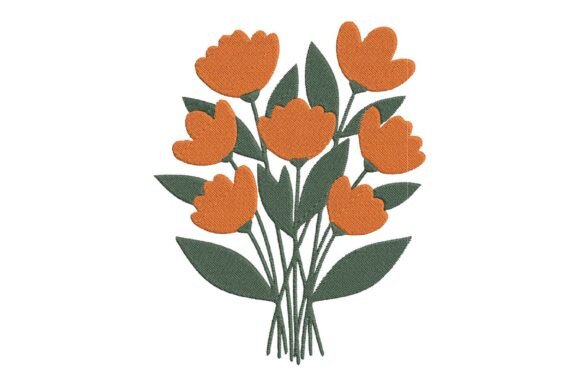
Minimalist Tulip Flower Embroidery
First Impression: Quiet Confidence, Not Quiet Design
As an embroidery designer who’s set up at over 40 craft fairs and stocked handmade goods in 12 boutique shops, I’ll say it plainly: Minimalist Tulip Flower Embroidery doesn’t shout — it invites. It lands as modern, elegant, and intentionally restrained. Not “cute,” not “rustic,” not “festive” — it’s soft-seasonal Spring energy with premium poise. That matters more than you think at a crowded market booth where shoppers scan tables in under three seconds. This design earns attention by breathing space into your display, not competing for it.
Where It Shines: Craft Fair Product Pairings That Convert
This isn’t a one-size-fits-all machine embroidery design — it’s a strategic accent. Here’s how it performs across high-impact craft fair products:
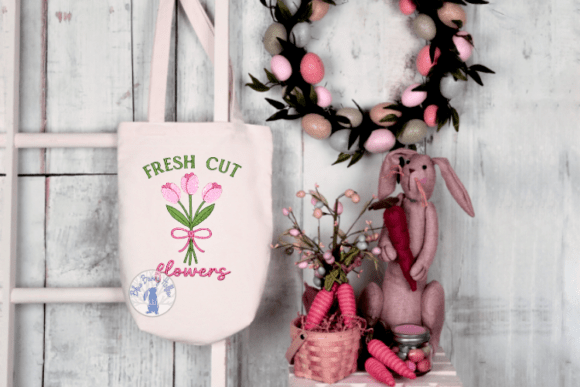
- Tote bag design: Perfect as a small left-chest or centered lower-panel motif. Reads cleanly from six feet away; avoids visual clutter on busy canvas.
- Apron embroidery: Ideal above the pocket or along the waistband. Adds refinement without overwhelming utility — customers associate it with thoughtful handmade quality.
- Tea towel embroidery: Works beautifully in the corner or centered near the top hem. The simplicity complements kitchen texture without fighting it.
- Embroidered patch: Highly scalable — clean lines hold up when stitched at 2.5"–3.5". Great for bundling (e.g., “Spring Botanical Patch Set”) or gifting.
- Fabric pouch & pillow cover: Serves as a subtle focal point — especially effective on linen, cotton-linen blends, or oatmeal-toned fabrics.
- Caps & market bags: Use with caution — only if the design is scaled to fit the curve comfortably. Test on scrap first; avoid tight crowns or narrow straps.
What Makes It Sell Online and In-Person
Minimalist Tulip Flower Embroidery excels where many Spring-themed designs fail: clarity at a glance. Etsy sellers will appreciate how well it photographs — no busy background needed. A clean white tote with this design reads instantly as “intentional,” not “generic.” As a digital embroidery file, it supports fast batch production: low stitch density means quicker runs, less thread breakage, and smoother transitions between fabric types. And because it avoids tiny stems, micro-petals, or dense fill areas, it scales reliably — whether stitched at 1.75" on a patch or 4.5" on a pillow cover.
Careful-Use Notes Every Embroidery Designer Should Check
Even minimalism has limits. Before cutting fabric or loading hoops, verify these practical points:
- Avoid placing it on heavily textured towels — fine stem lines may blur or float.
- On dark fabric, confirm thread colors provide enough contrast; light pastel threads can vanish on charcoal or navy.
- Do not shrink below 1.5" — delicate petal curves risk stitching distortion or loss of definition.
- Curved surfaces (like cap fronts) require careful hooping and possibly reduced density — test on scrap with your exact stabilizer stack.
- If your version includes any text (e.g., “Spring 2024”), check letter height — anything under 0.25" risks legibility issues.
Booth Impact & Buyer Psychology
At a craft fair, Minimalist Tulip Flower Embroidery functions like visual punctuation: it tells shoppers your brand values restraint, craftsmanship, and seasonal relevance — without saying a word. When grouped with other quiet botanicals or neutral-toned handmade products, it strengthens booth cohesion. Buyers pause longer when they see consistency in tone and execution — and that pause often becomes a purchase. It also elevates perceived value: a $28 linen pouch with this design feels more intentional (and justifies pricing) than one with a generic floral clipart transfer.
Production Reality Checks — From Hoop to Handoff
Before committing to 50 tote bags or listing on Etsy, run these checks:
- Test the embroidery file on scrap fabric — same weight, same finish as your final product.
- Check thread contrast across at least three fabric colors (light, medium, dark).
- Review spacing and stitch density — ensure petals don’t crowd or bleed into each other.
- Confirm hoop size compatibility — does it fit your most-used hoop without re-hooping mid-stitch?
- Inspect stabilizer needs — lightweight cutaway works best for stable wovens; tear-away + topping helps on knits or tea towels.
- Create at least one real mockup — not just a printable mockup. See how light hits the stitches in person.
- Compare fabric colors side-by-side — what looks balanced on screen may shift dramatically in natural light.
- Confirm commercial licensing — if selling finished products, ensure your digital embroidery file permits commercial embroidery use.
Final Thought: Minimalism With Momentum
Minimalist Tulip Flower Embroidery isn’t just another Spring embroidery file — it’s a versatile, scalable, and quietly confident design asset. It meets handmade makers where they are: balancing speed, beauty, and buyer appeal. For the Etsy seller refreshing their shop for March, the boutique owner curating a spring capsule, or the craft fair vendor building a cohesive table story, this design delivers elegance without excess. It doesn’t ask for attention — it earns it. And in a world of visual noise, that’s the highest compliment a small shop product can receive.