Wildflower Bouquet, Spring Flowers
A Designer’s First Look: Soft, Unfussy, and Quietly Confident
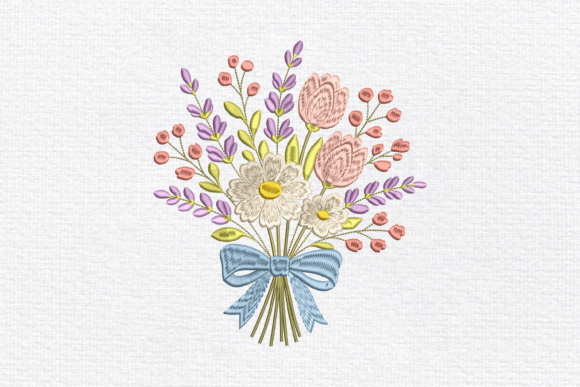
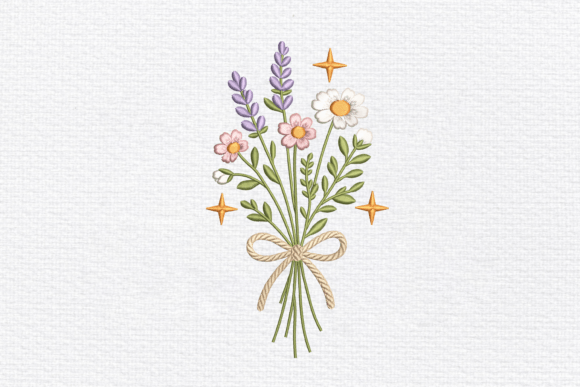
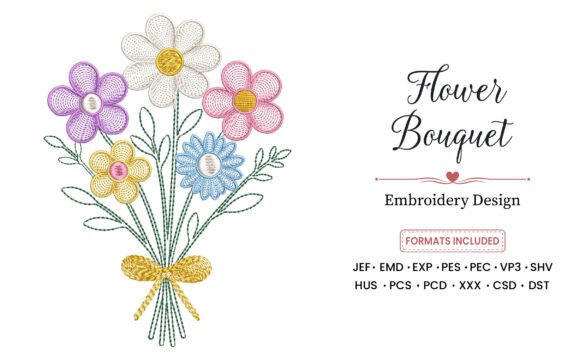
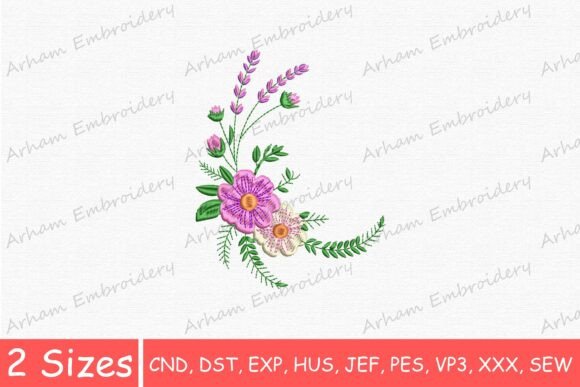
When Wildflower Bouquet, Spring Flowers landed in my inbox, I didn’t reach for the hoop right away—I paused. Not because it’s flashy or dramatic, but because it *breathes*. The layout feels like a hand-picked gathering: no rigid symmetry, no forced centering—just gentle asymmetry, varied petal lengths, and subtle spacing that mimics how real wildflowers settle in a mason jar or crumpled paper wrap. It’s not a bouquet you’d see on a wedding invitation; it’s the kind you tuck into a child’s lunchbox note or stitch onto a linen tea towel for a friend’s baby shower. That quiet intentionality is its strongest design asset.
Where It Lives Best: Real Projects, Real Reactions
Last week, I stitched Wildflower Bouquet, Spring Flowers onto a natural cotton tote bag for a local boutique’s spring launch. No embellishment—just the design centered on the front panel, 4.2" wide. Customers kept stopping to touch the stitching. Not the fabric—the stitching. Why? Because the satin stitch petals held their shape without stiffness, the fill-stitch centers had soft gradation (not flat blocks), and the stems used fine running stitch that flowed like ink lines. It looked handmade—not “machine-made.” That distinction matters when you’re selling at craft fairs or listing on Etsy: buyers pay more for perceived care, and this design delivers it without over-engineering.
I also tested it on a lightweight organic cotton onesie (baby embroidery). With light tear-away stabilizer and reduced top tension, the design stayed supple—no puckering, no stiffness against delicate skin. Parents responded strongly to the gentleness of the motif; one emailed asking if I could add a tiny bee (a simple custom edit) for her daughter’s nursery. That’s the kind of emotional resonance Wildflower Bouquet, Spring Flowers invites—it’s approachable, not intimidating.
Where to Proceed Thoughtfully
- Hoop size & detail: Don’t force it into a 3” hoop. The loosest outer blooms need breathing room—if your hoop is too tight, stems get clipped or petals lose definition. Aim for at least 4.5” minimum for clean results.
- Textured or stretchy fabrics: On terry cloth towels or ribbed sweatshirts, use cut-away + topping stabilizer. The open negative space between stems can sink or blur without support—especially on dense pile.
- Dark backgrounds: Test thread colors carefully. A pale butter yellow petal vanishes on navy unless you switch to ecru or oatmeal thread. Always run a black-and-white mockup first—it reveals contrast gaps faster than your eyes do.
- Curved surfaces: Skip caps or curved pillow edges unless you’re experienced with repositioning and under-hooping. The irregular shape doesn’t adapt well to tight curves without distortion.
- Frequent-wash items: For kitchen towels or baby bibs, confirm stitch density isn’t overly dense in the centers—tight fills can stiffen and crack after repeated laundering. A quick visual scan of the .dst or .pes file (if editable) helps spot potential trouble zones.
What It Adds to Your Craft Business—Beyond Aesthetics
Wildflower Bouquet, Spring Flowers quietly elevates perceived value. When stitched on an apron for a small-batch baking brand, it didn’t shout “gourmet”—it whispered “thoughtful.” That subtlety builds trust. Buyers don’t question whether it’s mass-produced; they assume it’s curated. For Etsy sellers, that translates to fewer “Is this handmade?” questions and more “Can you personalize the color palette?” inquiries—opening doors to upsells.
It also plays well across categories. As a machine embroidery design, it scales cleanly from a 2.8” patch (ideal for denim jackets) up to a 6” version on a pillow cover. As a digital embroidery file, it holds up in printable mockups—no jagged edges, no pixelated stems—so your product photos look cohesive and professional. And because it belongs to the Bouquets Bunches category, it pairs intuitively with other nature-based designs (think herb sprigs or berry clusters), making bundle creation effortless for digital product sellers.
Practical Notes Every Designer Should Run Before Stitching
- Test on scrap fabric *exactly* like your final project—same weight, same weave, same pre-wash status.
- Check thread color contrast on both light and dark fabric swatches before hooping.
- Review stitch density visually: are centers overly dense? Are outlines crisp or frayed-looking?
- Confirm hoop size compatibility—don’t assume “fits 5x7” means it stitches cleanly at the edges.
- Inspect small details: do the smallest buds hold shape? Does the lowest stem taper cleanly or end abruptly?
- Use proper stabilizer—not just “some,” but what the fabric *needs*: cut-away for knits, tear-away for stable wovens, topping for napped fabrics.
- Verify licensing terms before selling finished products or bundling as design assets—this is non-negotiable for commercial embroidery or craft business use.
Final Thought: It’s Not Just a Design—It’s a Tone Setter
Wildflower Bouquet, Spring Flowers won’t dominate a garment. It won’t scream for attention. But it will make someone pause, smile, and say, “That feels like spring.” That’s rare. In a market flooded with bold fonts and geometric repeats, this embroidery file offers quiet confidence—ideal for personalized gifts, boutique branding, holiday embroidery, and any handmade product where warmth and authenticity matter more than volume. Use it where you want people to feel seen, not sold to.