Cute Baby Lamb: A Seasonal Embroidery Gem
First Impressions: Sweetness, Softness, and Subtle Festivity
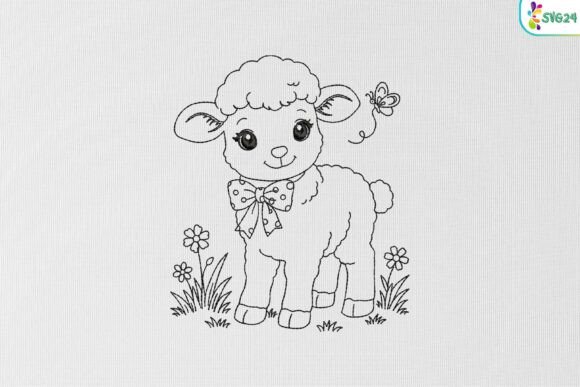
As an embroidery designer who’s curated seasonal collections for over twelve years, my first glance at Cute Baby Lamb delivers immediate emotional resonance—gentle, tender, and quietly joyful. It doesn’t shout “holiday!” but breathes the soft warmth of spring celebrations, Easter gatherings, baby showers, and early-summer family moments. The fluffy silhouette, expressive eyes, and delicate floral accents evoke nostalgia without leaning into kitsch; the bow adds just enough charm to feel intentional—not cutesy. This isn’t a loud, glitter-heavy holiday embroidery—it’s a cozy, elegant, and spiritually gentle machine embroidery design that fits seamlessly into both sacred and secular seasonal storytelling.
Real-World Seasonal Use: Where Cute Baby Lamb Shines
In my own shop planning, I immediately see Cute Baby Lamb thriving across high-intent holiday and gift categories. On sweatshirt embroidery, it anchors a “family matching” set—soft heather gray crewnecks with tonal thread make it feel premium and ageless. As a tote bag design, it transforms everyday carry into a handmade gift—especially when paired with linen or canvas that highlights stitch texture. For kitchen towel embroidery, its rounded shape and balanced negative space prevent visual clutter, while the flowers add subtle botanical rhythm perfect for spring table linens or Easter brunch settings.
It’s also ideal for pillow covers in nurseries or guest rooms—small enough to stitch cleanly on standard hoops yet detailed enough to hold attention from across a room. As an embroidered patch, it layers beautifully onto denim jackets or backpacks for craft fair displays. And yes—it works elegantly on ornaments and baby onesies, where its gentle scale and emotional tone align perfectly with gifting expectations: thoughtful, personal, and lovingly made.
Where to Use Cute Baby Lamb Thoughtfully
Like any well-designed seasonal embroidery, Cute Baby Lamb rewards intentionality. Its decorative bow and delicate flowers mean stitch density matters—avoid cramming it onto tiny hoops (<5" diameter) without testing. On thick fabrics like heavy terry cloth towels or quilted pillow covers, use cutaway stabilizer and reduce top tension slightly to preserve detail. Dark fabric demands careful thread color selection: pale pinks or creams may disappear—opt instead for heathered grays, warm ivories, or soft golds that retain charm without sacrificing visibility.
Steer clear of highly stretchy garments (like ribbed knits or curved baseball caps) unless you’ve tested stabilization thoroughly—those expressive eyes and fine floral outlines can distort under tension. And while metallic thread would *look* festive, it risks breaking on the bow’s tight curves—stick to high-sheen polyester or rayon for sparkle that stitches reliably. Also note: if your final product will undergo repeated washing (think baby bibs or kitchen linens), confirm the embroidery file uses secure satin and fill techniques—not just outline + light fill—that hold up over time.
Emotional & Commercial Impact During Peak Seasons
During holiday shopping windows, buyer emotion drives conversion—and Cute Baby Lamb taps into three powerful triggers: nostalgia (lamb as symbol of new life and innocence), care (evoking tenderness, protection, and softness), and timelessness (it won’t feel dated by next March). That translates directly to higher perceived value, stronger giftability, and improved customer trust—especially among Etsy sellers and small shop owners positioning handmade gifts as meaningful, not mass-produced.
Visually, its clean silhouette ensures strong recognition across mockups, social media previews, and printable promotional graphics—even at thumbnail size. When bundled with coordinating designs (a daisy sprig, a simple “Welcome Spring” script), it strengthens brand consistency across seasonal drops. And because it sits comfortably in both Baby Animals and broader Holiday Embroidery categories, it expands discoverability without diluting focus.
Practical Designer Notes Before You Stitch
- Test thread colors on both light and dark fabric—what reads as “delicate” on white may vanish on navy.
- Check stitch density before scaling—dense fills can overwhelm lightweight fabrics; sparse stitching may lack definition on textured surfaces like burlap or terry.
- Confirm hoop size compatibility with your target products—e.g., 4"x4" for onesies, 5"x7" for tote bags, 6"x10" for pillow covers.
- Use appropriate stabilizer: tear-away for stable wovens, cutaway for knits, and fusible + tear-away combo for towels.
- Create realistic mockups—not just flat digital renders, but stitched samples on actual fabric swatches, photographed in natural light.
- Review small details after stitching: check bow symmetry, eye clarity, and petal separation—these define perceived quality.
- Plan matching color palettes across your seasonal line—e.g., sage, oat, blush, and warm taupe—to unify Cute Baby Lamb with other Seasonal Embroidery pieces.
- Verify commercial licensing before selling finished products—this is non-negotiable for Etsy sellers and apparel decorators using digital embroidery files.
Final Thought: A Design That Grows With Your Shop
Cute Baby Lamb isn’t just another Embroidery file—it’s a versatile, emotionally intelligent anchor for your seasonal strategy. It bridges baby milestones and holiday moments, handmade authenticity and quiet elegance, digital precision and tactile warmth. Whether you’re launching a limited-edition Easter collection, refreshing your baby gift line, or building a year-round Baby Animals series, this design earns its place—not because it’s trendy, but because it’s thoughtfully composed, commercially flexible, and deeply human. Stitch it with care, present it with intention, and let its quiet sweetness do the rest.