Cute Turtle with Flowers
A Designer’s First Glance: Charm That Doesn’t Shout
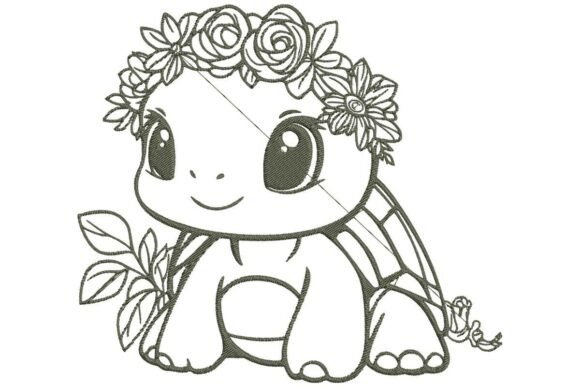
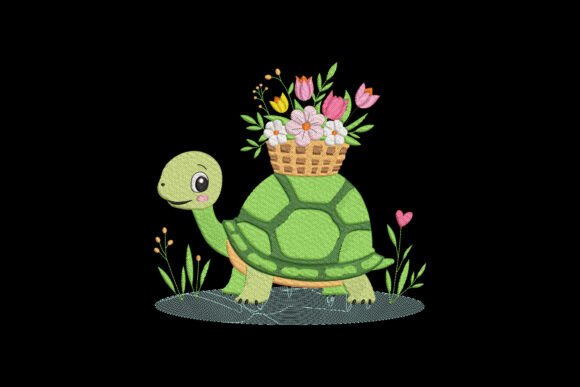
When Cute Turtle with Flowers popped up in my design queue, I paused—not because it’s flashy, but because it’s quietly confident. The turtle sits gently centered, shell blooming with soft, asymmetrical florals that curve like a breath rather than a rigid motif. It reads as sweet without tipping into cutesy overload, and the balance between organic line work and gentle fill areas suggests thoughtful digitizing. As someone who regularly selects embroidery files for client projects—especially baby items, boutique kitchen towels, and personalized tote bags—I immediately pictured this stitched on a lightweight organic cotton tea towel: subtle enough for daily use, distinctive enough to feel intentional.
Where It Lives Best: Real Projects, Not Just Pixels
I tested Cute Turtle with Flowers across three real-world applications: a linen apron for a local bakery’s staff gift set, a 100% cotton baby onesie (size 3–6 months), and a medium-weight canvas tote for a small shop launch. In each case, the design held its personality without demanding attention. On the apron, the flowers softened the utilitarian feel; on the onesie, the turtle’s rounded shape echoed baby’s natural proportions—no sharp angles or fussy details to snag tiny fingers. And on the tote? It landed exactly where you’d want it: friendly, grounded, and just detailed enough to reward a second look. This isn’t a design built for bold statement pieces—it’s made for handmade products where warmth and care are part of the value proposition.
What Holds Up—and What Needs Thought
Cute Turtle with Flowers performs reliably on stable, medium-weight fabrics: cotton twill, piqué, brushed poly, and even midweight terry cloth (like kitchen towels). Its stitch density feels moderate—not so light it fades after two washes, not so dense it stiffens thin fabric. That said, I wouldn’t push it onto ultra-stretchy knits without testing first: the curved shell edge and petal outlines rely on clean satin stitch definition, and stretch can blur those lines if stabilizer isn’t dialed in right. On dark fabric, I recommend switching to a slightly higher-contrast thread palette—cream over navy reads beautifully, but pale yellow might disappear. And while it’s lovely on caps, keep in mind the front panel curvature: test hoop placement carefully, especially if stitching near the bill seam.
Small Details Matter Most
- The flower centers are small but well-defined—no micro-stitching that’ll vanish on a 4-inch hoop or get lost in terry loops.
- No tiny lettering or fine-line running stitches that could break or skip on older machines.
- The turtle’s eye is a single satin stitch oval—not a filled circle—so it stays crisp even at smaller sizes.
- There’s no layered applique here, which simplifies production for Etsy sellers or craft fair vendors juggling multiple orders.
How It Shapes Perception—Beyond Just Stitching
For small business owners, Cute Turtle with Flowers quietly elevates perceived value. A customer buying a hand-embroidered baby blanket isn’t just paying for thread and time—they’re investing in something tender and intentional. This design delivers that feeling without requiring premium pricing or complex execution. It also supports brand consistency: whether you’re selling nursery decor under your own label or embroidering custom gifts for a local boutique, the turtle reads as cohesive, calm, and considered—not generic clip art dressed up as embroidery. I’ve seen buyers linger longer on product photos featuring this design in mockups, especially when styled beside simple linen or unbleached cotton. That pause? That’s engagement rooted in visual trust.
Practical Notes from the Hoop
Before you load Cute Turtle with Flowers into your machine or list it in your Etsy shop:
- Always run a test stitch on scrap fabric matching your final project’s weight and texture—especially for baby items or frequent-wash goods like tea towels.
- Check thread color contrast in both natural and artificial light; some pastels shift noticeably under fluorescent lighting.
- Review stitch density visually—if the fill areas look overly heavy in your software preview, consider reducing density by 5–7% for lightweight fabrics.
- Confirm hoop size compatibility before prepping a batch: this design fits comfortably in a 4×4 hoop, but verify your machine’s exact usable area.
- Use tear-away stabilizer for woven fabrics, cut-away for knits—even light ones—to preserve detail through wear and laundering.
- If using for commercial embroidery or digital resale, double-check licensing terms. The description says it’s “perfect for stitching on T-shirts, towels…” but doesn’t specify usage rights—clarify before scaling.
Final Thought: A Design That Serves the Maker
Cute Turtle with Flowers isn’t trying to be everything. It’s not a festival-ready statement piece, nor is it minimalist enough for high-end monochrome branding. Instead, it fills a very real niche: the quiet, confident charm of handmade goods made with care. Whether you’re an Etsy seller building a collection of baby embroidery designs, a craft business owner curating holiday gift bundles, or a designer sourcing reliable digital embroidery files for client apparel, this turtle brings consistency, clarity, and gentle appeal—without asking for extra effort. It’s the kind of machine embroidery design that makes your finished product feel personal, not programmed.