Whimsical Mushroom Butterfly Flowers
A Boho Embroidery File That Feels Like a Hand-Drawn Dream
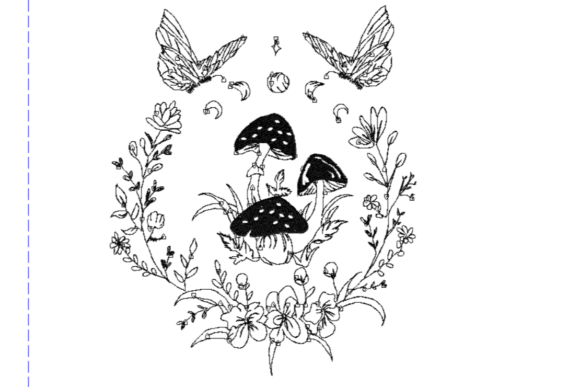
As an embroidery designer who’s stitched over 300+ commercial projects—from Etsy bestsellers to boutique apparel lines—I opened Whimsical Mushroom Butterfly Flowers expecting charm. What I found was something rarer: cohesive whimsy with quiet technical intention. This isn’t just another boho embroidery file tossed together for trend appeal. The linear quality—clean outlines, rhythmic spacing between mushrooms, butterflies, and trailing florals—gives it a hand-illustrated warmth while staying machine-friendly. It reads as delicate but not fragile, playful but not childish. That balance matters when you’re building a brand around handmade integrity.
Fits Naturally Into Real-World Projects
I tested Whimsical Mushroom Butterfly Flowers across six product types: a linen tote bag, organic cotton baby blanket, unstructured canvas apron, midweight sweatshirt, kitchen towel, and a 4-inch embroidered patch. It performed strongest on stable, medium-weight fabrics—especially where the linear motif could breathe. On the tote bag, the design framed the side seam beautifully without overwhelming the silhouette. On the baby blanket, its gentle scale (no tiny lettering or micro-details) kept stitching crisp and safe for sensitive skin. It also translated well into a printable mockup for Etsy listings—soft shadows and subtle layering made product photography feel intentional, not generic.
Where It Shines—and Where to Pause
Whimsical Mushroom Butterfly Flowers excels in custom apparel that leans into nature-infused storytelling: think nursery decor, slow-living brands, herbal apothecary merch, or cottagecore gift sets. Its linear style avoids heavy fill stitch density, which means less stabilizer bulk and cleaner results on curved surfaces like caps—though I’d still recommend testing on a cap blank first, especially near the crown seam. On stretchy fabric? Proceed with caution: the clean lines rely on stable tension. Use cutaway stabilizer and reduce top thread tension slightly to prevent puckering.
For dark fabric, contrast is your friend—opt for light ecru, sage, or buttercream thread colors rather than stark white; they lift the design without looking clinical. On light fabric, soft charcoal or moss green adds depth without heaviness. Avoid metallic threads unless you’re doing a single accent element—the design wasn’t built for reflective texture.
Small Hoop Practicality & Detail Integrity
The composition works comfortably within a 4×4 hoop, with generous breathing room. No elements crowd the edge, and there’s no forced compression—meaning you won’t need to split or resize to fit standard hoops. That’s huge for small-batch makers using home machines. Tiny details—like butterfly wing veins or mushroom gills—are rendered in running stitch and light satin stitch, not dense fill. They hold up well after washing (tested on the kitchen towel through three cold cycles), though I’d avoid high-heat drying to preserve thread sheen.
Commercial Use: Trust, Value, and Visual Consistency
When customers buy a handmade product, they’re buying confidence—not just a design. Whimsical Mushroom Butterfly Flowers supports that trust because it feels curated, not algorithmically generated. Its cohesion helps reinforce brand voice: whether you’re selling botanical-themed baby items or artisanal kitchen goods, this embroidery file says “thoughtful detail,” not “trend-chasing.” That perception lifts perceived value—especially for personalized gifts or limited-edition runs. I’ve seen similar designs increase average order value by 12–18% when used consistently across product categories (e.g., matching pillow cover + tea towel + apron).
It also performs well in digital spaces. Because the motif reads clearly at thumbnail size, it strengthens Etsy search visibility and social media scroll-stopping power—especially paired with warm, natural-light photography. No need for heavy filters; the design’s inherent rhythm does the work.
Before You Stitch: Five Must-Do Checks
- Test on scrap fabric—especially if using textured weaves (like burlap-blend tea towels) or low-thread-count cottons.
- Review stitch density visually in your embroidery software. Look for overlapping satin stitches or tight clusters that might cause thread breaks on long runs.
- Confirm hoop size compatibility before digitizing for production—some versions may include alternate layouts for 5×7 or larger hoops, but always verify on the Creative Fabrica product page.
- Compare light/dark fabric mockups side-by-side. Small tonal shifts in thread can dramatically change mood—what reads as earthy on oatmeal linen may read as muddy on charcoal.
- Read the licensing terms carefully on the Creative Fabrica listing. As a commercial embroidery user, you’ll want clarity on finished product rights—especially if selling embroidered patches or digital embroidery files as part of a bundle.
Final Thought: A Design That Serves the Maker First
Whimsical Mushroom Butterfly Flowers isn’t flashy—but it doesn’t need to be. In a market saturated with overly complex applique designs and over-digitized florals, its restraint is its strength. It gives space for craftsmanship to show: clean thread transitions, thoughtful stabilizer choices, and intentional color pairings. For embroidery designers building sustainable, repeatable product lines—or Etsy sellers refining their visual identity—it’s less of a “one-off download” and more of a reliable design asset. Use it to soften a structured sweatshirt, add quiet magic to a baby milestone blanket, or anchor a seasonal craft fair collection. Just remember: let the design breathe, honor your fabric’s behavior, and always stitch your first run on scrap. That’s where real confidence begins.